Author: Housing Pulse USA Editorial Team

  • Why Higher Incomes Still Do Not Fix Housing Affordability

    Why Higher Incomes Still Do Not Fix Housing Affordability


    By Published
    Housing Pulse USA publishes payment-first housing affordability, mortgage-cost, and home-buying explainers built for readers who need clearer household-cost decisions before they move.
    Reviewed against 3 linked public sources.


    Reader intent

    Questions this article answers

    1. Why doesn't higher income fix housing affordability?
    2. How do rates and prices overpower raises?
    3. Why do buyers still feel squeezed after wages improve?
    4. What should households track instead of wage headlines alone?


    A better paycheck can help, but housing affordability is still decided by the payment stack a household has to carry every month. If mortgage rates, home prices, taxes, insurance, and repair reserves stay elevated, income growth alone does not restore practical buying power.

    Quick answer: Higher incomes can improve qualification and cash flow, but they do not fix affordability when the all-in payment on realistic homes still exceeds what a household can comfortably carry.

    Who still feels the squeeze

    • First-time buyers trying to enter at today’s rates and prices.
    • Move-up buyers who would have to trade an older low-rate mortgage for a much higher one.
    • Households with childcare, student loans, irregular income, or other fixed obligations that reduce residual cash flow.
    • Buyers in markets where insurance, property tax, HOA fees, or basic maintenance reserves have moved up faster than pay.

    A hand holding a house key beside a model home, illustrating how a higher income still has to face the full housing cost stack.
    Photo source: “Housing investment prices. Hand holding key to new house door .” by Jakub Zerdzicki via Pexels.

    Why higher income is not the same as affordability relief

    Qualification is not comfort

    Affordability fails when people confuse a lender’s approval range with a household’s comfort range. A raise can help a borrower qualify for more debt, but that does not mean the payment leaves enough room for savings, repairs, transportation, food, and routine surprises after closing.

    Gross pay is not spendable cash flow

    Income headlines are usually gross numbers. Buyers live on after-tax cash flow. If the raise that looks meaningful in a wage report turns into a much smaller monthly increase after payroll taxes and benefit deductions, the household may still be staring at a payment that moved up faster than take-home pay did.

    That gap is why stronger income data can coexist with buyer frustration. The macro story says wages improved. The purchase decision still says the payment on a realistic home is too high.

    Where affordability gets lost in the payment stack

    Housing affordability is built from more than the contract price. Buyers have to absorb the mortgage rate, the principal and interest payment, taxes, insurance, HOA dues where relevant, and the repair reserve that keeps homeownership from turning into an emergency-funded gamble.

    Cost layer Why it keeps pressure on buyers Decision question
    Mortgage rate Rates reprice the same home quickly, so a modest raise can disappear into higher financing cost. What does today’s rate do to the payment on the homes you would actually consider?
    Home price Sticky prices mean households need larger payments or more cash even when pay improves. Has the asking-price range you shop in actually become easier to finance?
    Property tax and insurance These costs can move independently of wages and can reset the all-in monthly number. Have you priced the real escrow burden in your ZIP code, not just the mortgage quote?
    Repairs, HOA, and reserves Ownership stays fragile when buyers budget to the mortgage and ignore upkeep. What is left after housing if something breaks in the first year?

    Rates can overpower raises faster than many buyers expect

    What the macro headlines miss: wage gains show up as broad averages, but a buyer experiences the housing market through one specific rate quote, one tax bill, one insurance premium, and one reserve target. Macro relief does not automatically become household relief.

    Mortgage rates change the payment on the same house immediately. A household can earn more than last year and still lose purchasing power if the rate environment moved against it faster than wages improved. That is the core reason higher incomes can coexist with weak affordability.

    Ownership costs do not stop at principal and interest

    Property tax, homeowners insurance, and maintenance reserves are where many optimistic budgets break down. If those costs are rising in the markets people are targeting, better wages may only keep the buyer from falling further behind rather than moving the household into a truly comfortable payment band.

    Who still feels squeezed even when wages rise

    First-time buyers

    First-time buyers have no legacy mortgage to protect and no prior home equity to roll forward. They often absorb the full combination of current price levels, current rates, and today’s tax and insurance environment all at once.

    Move-up buyers locked into older low rates

    Households that already own may still feel stuck because moving can mean replacing a much lower existing mortgage rate with a materially higher one. A better income does not automatically justify giving up a favorable old loan if the payment jump is too large.

    Households with uneven or crowded budgets

    Buyers with variable commissions, self-employment income, childcare, student loans, or medical and transportation obligations often feel the squeeze longest. They may look healthy in broad income statistics but still need a wider margin of safety than headline wage growth suggests.

    What options buyers still have

    Buy less payment, not just less house

    A smarter adjustment is often to shop for a lower monthly obligation instead of anchoring on square footage or list price alone. That can mean a smaller home, a different submarket, a townhouse instead of a detached house, or a neighborhood where tax and insurance friction is lower.

    Delay the purchase and improve optionality

    Waiting is not a free choice, but it can still be rational when the payment is too tight. Building cash reserves, protecting credit, and tracking rates and inventory can be better than forcing a purchase that leaves no room for error.

    Compare other supply paths before assuming income is the only lever

    If you are trying to widen your options rather than chase wage headlines, compare the broader affordability squeeze with alternatives such as factory-built homes. That route does not solve every buyer problem, but it is one of the few supply-side levers that can sometimes change the cost stack instead of only changing the buyer’s income.

    Decision lens:

    The practical question is not “Did income grow?” It is “Does the payment on a realistic home still leave enough room for savings, repairs, and normal life?” If the answer is no, affordability is still broken for that household.

    A couple sitting with moving boxes in a new home, representing the gap between qualification and comfortable ownership.
    Photo source: “Young Couple Enjoying New Home with Boxes” by Vitaly Gariev via Pexels.

    What to track before calling the market more affordable

    • Current mortgage quotes for the homes and down-payment range you would actually shop.
    • The all-in payment after taxes, insurance, HOA dues, and a basic repair reserve.
    • Inventory and days on market in your local price band, not just national headlines.
    • Residual monthly cash flow after housing, debt, childcare, transportation, and food.
    • Whether your raise is recurring and durable or whether it depends on bonuses, overtime, or volatile business income.

    Update history and evidence standard

    Updated April 10, 2026: this refactor reorganized the article around monthly-payment decision-making, clarified who remains under pressure, and replaced softer sourcing with primary housing, rate, price, and income references where possible. If you spot a local tax, insurance, or financing detail that materially changes the decision logic, use Contact so the editorial team can review and correct it.

    Bottom line

    Higher incomes help, but they do not fix housing affordability on their own because households buy a payment, not a wage headline. If financing, prices, taxes, insurance, and ownership risk remain elevated, stronger pay may only slow the damage instead of restoring comfortable buying power.

    That is why buyers should judge affordability through payment-level math on realistic homes, not through broad optimism about wages. The market becomes more affordable when several cost layers move in the buyer’s favor at once, not when income alone improves.

    Continue the decision web

    If stronger pay still leaves the move tight, compare the monthly budget in How Much House Can You Actually Afford?, the pre-tour filter in How to Set a Home Budget Before You Tour, and the reserve test in How Much Emergency Savings Should You Have After Buying a House?.


    How this article was produced

    This article was drafted with AI assistance and published by the Housing Pulse USA Editorial Team, which is responsible
    for what appears here. Sources are linked in the text, and photographs carry their own credit and
    licence.

    We do not claim that a person re-checks every article before it is published, and we do not
    present this as financial, legal, or tax advice. If you find something that looks wrong, tell us
    and we will correct or withdraw it.

  • What Percentage of Take-Home Pay Is Too Much for Housing?

    What Percentage of Take-Home Pay Is Too Much for Housing?


    By Published
    Housing Pulse USA publishes payment-first housing affordability, mortgage-cost, and home-buying explainers built for readers who need clearer household-cost decisions before they move.
    Reviewed against 3 linked public sources.


    Reader intent

    Questions this article answers

    1. What percentage of take-home pay is too much for housing?
    2. Why can a lender-approved payment still feel too tight?
    3. What should be counted in a take-home-pay housing test?
    4. Why does the same percentage feel different for different households?


    There is no universal percentage of take-home pay that is automatically safe or automatically too high for housing. The payment becomes too high when the full stack, including taxes, insurance, HOA dues, debt payments, utilities, repairs, and reserve cash, stops fitting after your paycheck actually lands.

    A woman counting cash beside a calculator and receipts while reviewing a household budget.
    Photo source: Woman Counting Cash by Kaboompics.com via Pexels.
    Quick answer: A housing payment is too high when it still needs optimistic assumptions after take-home pay arrives. If the payment only works by underestimating taxes, ignoring HOA dues, skipping maintenance reserves, or shrinking emergency savings, the household is already beyond a sturdy limit.
    This guide separates official mortgage and budgeting sources from editorial judgment. Any planning ranges or stress-test language below are explained as household decision heuristics, not lender promises. Use Corrections or Contact if a public source, worksheet, or cost assumption materially changes.

    Who this guide is for

    Use this page when the mortgage looks possible on paper, but you are not convinced the payment will still feel workable after payroll deductions, insurance, taxes, utilities, and real monthly life stay visible.

    The shortest useful answer: qualification math and household math are not the same thing

    The CFPB defines debt-to-income ratio using gross monthly income, which means income before taxes and other deductions. That is useful for underwriting. It is not the same as deciding what still works once payroll taxes, health premiums, retirement contributions, child care, and ordinary life have already taken their share.

    This distinction is where buyers get into trouble. A lender-approved payment can still leave the household short on maintenance cash, insurance increases, utilities, or the kind of reserve money that makes ownership survivable after closing. If the move only works when you think like an underwriter and stop thinking like the person who pays the bills every month, the payment is already suspect.

    Framework What it helps with What it misses
    Gross-income DTI Screens for qualification and basic loan sizing. Taxes, payroll deductions, reserve targets, commuting, utilities, and what the payment feels like after closing.
    Rule-of-thumb percentage Useful as a first-screen benchmark when you need a quick warning signal. How taxes, insurance, HOA dues, repairs, or family obligations differ from one household to the next.
    Take-home-pay stress test Shows whether the payment still fits after the real monthly stack and savings needs remain visible. Still fails if tax, insurance, HOA, or maintenance assumptions are lazy or incomplete.

    Why take-home pay tells you more than a gross-income ratio

    The CFPB’s Assess your spending and Monthly Payment Worksheet are useful because they keep take-home income, current spending, and savings on the same page. The worksheet does not ask whether the payment can qualify in isolation. It asks whether total monthly spending and savings still fit inside take-home income.

    That is the stronger question for readers deciding whether the move is durable. If your take-home pay already has to support debt service, savings, child care, or recurring medical and commuting costs, the same housing percentage can feel manageable for one household and punishing for another.

    A couple reviewing bills at a kitchen table while one of them looks at a phone, illustrating monthly-payment stress.
    Photo source: Shocked Man Holding Coffee Mug by Mikhail Nilov via Pexels.
    Editorial inference, clearly labeled: a payment can already be too high even below a familiar benchmark if it forces the household to zero out savings, push repairs aside, or pretend that insurance and tax drift will not happen. The percentage does not protect you from weak assumptions.

    What the 30 percent rule gets right, and what it misses

    HUD USER explains that the 30 percent affordability threshold became a long-running public benchmark for housing burden. It still works as a broad warning signal. If housing is swallowing a very high share of income, that deserves attention.

    But HUD USER also notes that percentage-based measures have important limits. They do not capture neighborhood tradeoffs, transportation costs, household obligations, or the uneven way ownership costs move. In ownership, list price, mortgage rate, property taxes, insurance, HOA dues, maintenance, and reserve needs do not change together. That is why a clean-looking percentage can still hide a weak household margin.

    Count the full housing stack, not just principal and interest

    The CFPB says the total monthly payment can include taxes, homeowners insurance, and mortgage insurance in addition to principal and interest. The CFPB separately notes that HOA dues are usually paid separately, which is one reason buyers undercount the real monthly burden.

    A trustworthy take-home-pay test therefore has to include everything that competes for the same paycheck, not just what sits on a lender worksheet. Taxes still count if they are not escrowed. HOA dues still count if they are billed separately. Repairs still count even though they are not underwriting line items. Reserve cash still counts because ownership without a repair cushion is a thinner position than the headline payment suggests.

    Cost layer Why it matters in a take-home test How buyers undercount it
    Principal and interest The base loan payment, but not the full ownership answer. Treated as “the mortgage” even when several major costs sit outside it.
    Taxes, insurance, and mortgage insurance These shift the all-in payment and can rise after closing. Placeholder estimates, stale listing data, or quotes that emphasize only principal and interest.
    HOA dues and special assessments They hit the same budget even if the mortgage servicer does not collect them. Forgotten because they are separate from the quoted mortgage payment.
    Utilities, maintenance, and reserve cash These are what make a home sustainable instead of merely purchasable. Dropped because the lender does not underwrite them directly.
    Debt, commuting, child care, and irregular bills They explain why the same payment is safe for one household and fragile for another. Left outside a housing-only percentage even though they compete for the same take-home income.

    Official tools point to the same conclusion: the margin matters

    The CFPB’s Figure out how much you want to spend tool says buyers should build a total monthly payment budget and also subtract money needed for other goals, moving costs, furnishings, renovations, or an emergency cushion when figuring out available cash for closing. That is a crucial signal: the monthly number and the reserve number belong to the same decision.

    Fannie Mae’s guide to the costs of buying and owning a home makes the reserve issue even clearer by telling buyers to prepare for unexpected expenses and naming a rainy-day fund equal to three to six months of essential expenses as a safety net. That does not create a one-size-fits-all threshold. It does show that “can I pay the mortgage?” is too narrow by itself.

    A woman holding a jar labeled savings, representing reserve cash that should remain visible in a housing budget.
    Photo source: A Woman in Plaid Long Sleeves Holding a Glass Jar by Tima Miroshnichenko via Pexels.
    Illustrative result What it usually means Best next move
    Housing still leaves visible room for debt service, utilities, maintenance, and savings every month. Usually workable if tax, insurance, and HOA assumptions are already realistic. Stress-test against one bad month and re-check cash to close.
    Housing only works if you reduce savings, skip repair reserves, or assume flat insurance and taxes. Borderline. The payment may qualify but the household margin is weak. Rebuild the budget with stricter assumptions and compare against a pre-tour budget.
    Housing only works if reserves disappear, maintenance is ignored, or every other cost is minimized. Already too tight. The exact percentage is no longer the core issue. The missing margin is. Step back to How Much House Can You Actually Afford? and compare whether waiting or changing the target home is cleaner.

    A buyer checklist before you trust the percentage

    • Start with take-home pay once you move from qualification to household decision-making.
    • Confirm whether the quoted payment includes taxes, homeowners insurance, mortgage insurance, and escrow funding.
    • Add HOA dues and likely utilities separately if they are not already inside the quoted total.
    • Keep maintenance and reserve cash visible instead of assuming ownership will behave like renting.
    • Pair the monthly test with a cash-to-close check so the move does not fail on liquidity first.
    • If the only way the payment works is by suppressing savings or repair lines, the payment is already too high for the move to be resilient.

    What this page can and cannot tell you

    This page can help you judge whether a housing payment still fits after the real monthly cost stack is counted against take-home pay. It cannot replace a property-specific tax bill, an insurance quote for the address, HOA documents, or a household-specific review of debt and irregular spending. Those are the details that turn a percentage into an actual decision.

    If you need the fuller buying decision next, move to our affordability guide. If you are still setting the ceiling before home shopping, use our pre-tour budget guide. If your problem is upfront liquidity rather than monthly carry, read our cash-to-close explainer.

    Bottom line

    What percentage of take-home pay is too much for housing? There is no universal line that can answer that for every household. But there is a dependable test: if the full housing stack wipes out reserves, forces weak assumptions, or leaves too little room after your paycheck hits, the payment is already too high for the move to be sturdy.

    Next step: Use this page with the payment-first affordability guide, the home-budget guide, and the cash-to-close guide so the monthly number and reserve position are judged together.

    Sources

    These sources are public, official references. Any planning thresholds or scenario framing above are editorial analysis layered on top of those sources, not a guaranteed affordability rule.

    1. Consumer Financial Protection Bureau, “What is a debt-to-income ratio?”
    2. Consumer Financial Protection Bureau, “On a mortgage, what’s the difference between my principal and interest payment and my total monthly payment?”
    3. Consumer Financial Protection Bureau, “Are condo/co-op fees or homeowners’ association dues included in my monthly mortgage payment?”
    4. Consumer Financial Protection Bureau, “Assess your spending”
    5. Consumer Financial Protection Bureau, “Figure out how much you want to spend”
    6. Consumer Financial Protection Bureau, “Monthly Payment Worksheet”
    7. Fannie Mae, “Prepare for the Costs of Buying and Owning a Home”
    8. HUD USER, “Defining Housing Affordability”

    How this article was produced

    This article was drafted with AI assistance and published by the Housing Pulse USA Editorial Team, which is responsible
    for what appears here. Sources are linked in the text, and photographs carry their own credit and
    licence.

    We do not claim that a person re-checks every article before it is published, and we do not
    present this as financial, legal, or tax advice. If you find something that looks wrong, tell us
    and we will correct or withdraw it.

  • What Counts as Cash to Close Before an Offer

    What Counts as Cash to Close Before an Offer?


    By Published
    Housing Pulse USA publishes payment-first housing affordability, mortgage-cost, and home-buying explainers built for readers who need clearer household-cost decisions before they move.
    Reviewed against 3 linked public sources.


    Reader intent

    Questions this article answers

    1. What counts as cash to close before an offer?
    2. Does earnest money count toward cash to close?
    3. Why can escrow and prepaids change the number?
    4. How should reserve cash fit into the upfront plan?


    What counts toward cash to close before an offer is the settlement money a buyer still needs after the down payment, lender and title charges, prepaid items, escrow funding, and any earnest-money credit are added together.

    A buyer receiving house keys, illustrating the money and documents that have to be ready at closing.
    Photo source: “A Person Giving a Bundle of Keys to another Person” by Alena Darmel via Pexels.

    Quick answer: Cash to close usually includes the down payment still due at settlement, lender and title closing costs, prepaid items, initial escrow funding, and any adjustments for taxes, insurance, credits, or earnest money already paid. The final number can move because insurance quotes, tax timing, seller credits, rate locks, and escrow requirements are local and loan-specific rather than generic.
    Source-dependent guidance is updated when material facts change. Use Corrections or Contact if a quoted cost assumption, local tax note, or insurance condition no longer reflects the current evidence. Commercial relationships do not rewrite editorial conclusions.

    Who this guide is for

    Use this page when the purchase looks possible but the upfront wire, deposits, and reserve hit are still fuzzy.

    • Buyers who know the list price they want to target but are less certain about the upfront cash burden.
    • Households trying to separate earnest money, down payment, closing costs, prepaids, and escrow instead of treating them as one blurry bucket.
    • Readers comparing “we can probably make this work” against a more disciplined offer strategy.
    • Anyone who has already read our payment-first affordability guide and now needs the upfront-cash side of the decision.

    What cash to close usually means

    Buyers often hear one sentence that sounds simple: bring your cash to close. The problem is that the phrase hides several different money movements. Some items are true closing costs. Some are prepaids or escrow deposits. Some, like earnest money, may have been paid earlier and can reduce what still has to be wired at settlement. Others, such as inspections, appraisals, or moving expenses, can hit before or outside the closing table even though they still affect whether the purchase is workable.

    The CFPB’s home-buying cost overview is useful here because it keeps the full cost picture together instead of pretending that “purchase price” and “mortgage payment” answer the whole question. Freddie Mac’s upfront-cost budgeting guide does the same from a buyer-planning angle: save for more than the down payment, because the offer process and closing process pull cash at different points.

    Line item Usually part of cash to close? When it is often due What changes it
    Down payment still due Yes At settlement, minus any earnest money already credited Purchase price, loan type, down-payment strategy, seller concessions
    Lender and title closing costs Yes At settlement Loan amount, rate lock choices, title company pricing, state and county recording rules
    Prepaids Usually yes At settlement Closing date, daily interest, first premium timing, local tax calendar
    Initial escrow funding Usually yes when escrow is required At settlement Property taxes, insurance premium, reserve cushion, lender rules, closing month
    Earnest money deposit Usually credited against the final amount rather than added twice After contract acceptance or on the builder’s schedule Offer terms, local custom, builder contract rules, contingencies
    Inspection, appraisal, moving, and utility setup Often outside the formal closing figure Before closing or immediately after Inspection scope, lender appraisal, distance of move, utility deposits, repairs before occupancy

    The easiest mistake: mixing up earnest money, down payment, and closing costs

    These are not interchangeable concepts. Earnest money is a contract deposit that shows seriousness and may be credited later. The down payment is the equity portion you are putting into the purchase. Closing costs are the lender, title, recording, and settlement expenses needed to complete the transaction. Prepaids and escrow funding are separate again. Buyers who mentally collapse all of that into “my down payment” usually underestimate how much liquidity has to be available before the keys are handed over.

    That distinction matters because the strain starts before closing day. An earnest money deposit can leave checking earlier than expected. Inspection and appraisal bills can land before the final loan package is settled. Then, when the formal settlement statement arrives, the buyer still has to fund the remaining down payment, the closing charges, and any prepaid items. That is why a purchase can feel safe on a monthly-payment spreadsheet and still become uncomfortably tight in cash-flow terms.

    Practical check: If you are saying “we have the down payment,” ask the harder follow-up: do we also have the rest of the settlement cash, the early due diligence costs, and enough reserve left after the wire lands?

    Why prepaids and escrow make the number jump

    The biggest surprise is often not the lender fee sheet. It is the fact that taxes and insurance have timing. Depending on the state, county, insurer, and closing month, the settlement statement may need daily interest, the first year’s insurance premium, and several months of escrow reserves. That is why two homes with similar prices can create very different cash-to-close requirements.

    The insurance piece deserves special attention. The CFPB advises buyers to get an informal insurance estimate before committing to a house, especially where location risk or prior damage may change availability or price. If the quote comes in far above your placeholder estimate, the effect is not just on the monthly payment. It can also increase the amount that has to be funded before closing.

    Property taxes can do the same. A buyer who budgets from old listing-site numbers without checking local timing, reassessment behavior, or escrow requirements can underestimate both the monthly carrying cost and the upfront wire amount. The wrong placeholder assumption does not stay small merely because the list price looked manageable.

    Paperwork, sketches, and project tools on a table, illustrating line-item planning before closing.
    Photo source: “Helmet, Level and Sketches” by Pavel Danilyuk via Pexels.

    A realistic worksheet before you make an offer

    Use one worksheet for the entire move, not separate scraps of math. The point is not perfect prediction. The point is preventing preventable surprises before earnest money is on the line. The example below is illustrative, not a quote. It shows how the final number can climb even when the purchase itself still looks normal.

    Illustrative $350,000 purchase worksheet Estimated amount Why it is there
    Down payment at 10% $35,000 Core equity contribution before lender financing fills the rest.
    Loan and title closing costs $7,200 Lender charges, title work, settlement services, recording, and related items.
    Prepaid interest and insurance $2,100 Depends on closing date, insurer quote, and when the first payment cycle begins.
    Initial escrow funding $2,900 Funds the tax and insurance reserve the servicer wants at closing.
    Less earnest money already paid -$5,000 Credited against the total still due if contract terms hold.
    Estimated cash to close at settlement $42,200 This still excludes moving costs, utility setup, and any immediate repairs.

    The lesson is not that your own number will look like this. The lesson is that the offer-stage question should never be “Can we scrape together the down payment?” It should be “Can we cover the full settlement cash, the pre-closing bills, and the first few months of ownership without stripping our reserves to the bone?”

    What can still change between the estimate and the closing table

    Cash to close becomes dangerous when buyers treat the first estimate like a final invoice. The CFPB’s Closing Disclosure guide matters because it frames the final review point correctly: compare the Closing Disclosure with the Loan Estimate and review what moved before money is sent. The timing matters too. The CFPB says borrowers should receive the Closing Disclosure at least three business days before closing, which is exactly why late surprises deserve scrutiny instead of resignation.

    Common reasons the number drifts

    The final settlement figure can move for normal reasons, which is why buyers should look at the line items rather than treating every change as either harmless or fatal.

    • The insurance quote was too optimistic when the early worksheet was built.
    • The closing date shifted, changing prepaid interest or escrow timing.
    • Seller credits changed during inspection or repair negotiations.
    • The loan structure changed because the rate lock, points, or cash-reserve plan changed.
    • Title, recording, or local government charges were estimated broadly instead of specifically.

    Rate sensitivity belongs in this conversation too. Freddie Mac’s mortgage-rates explainer notes that even small rate differences can change payments meaningfully. That does not just matter for the long-term monthly budget. A changed rate or pricing choice can also alter lender charges or the amount of cash a buyer wants to preserve instead of spending upfront.

    A buyer checklist before the offer goes out

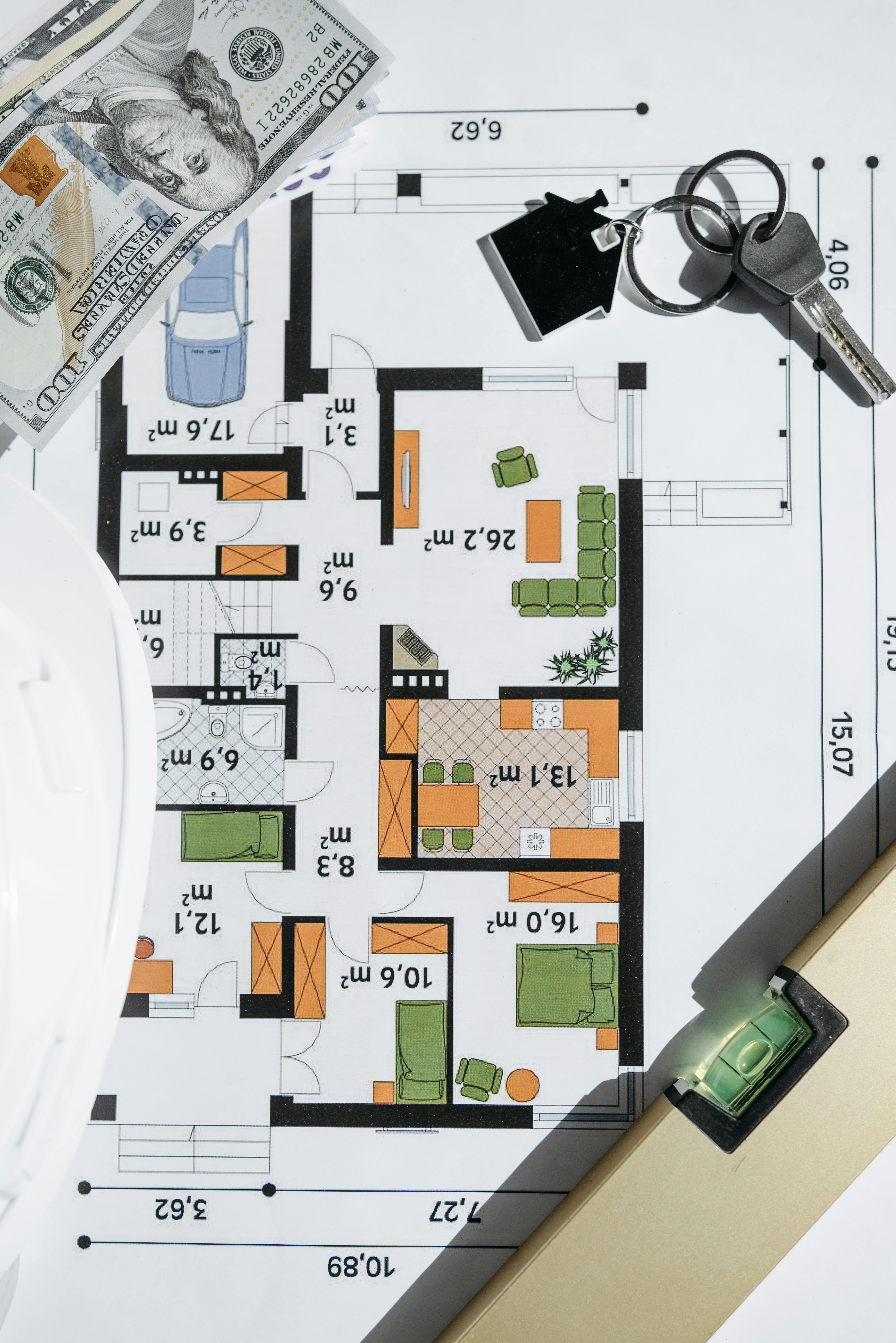
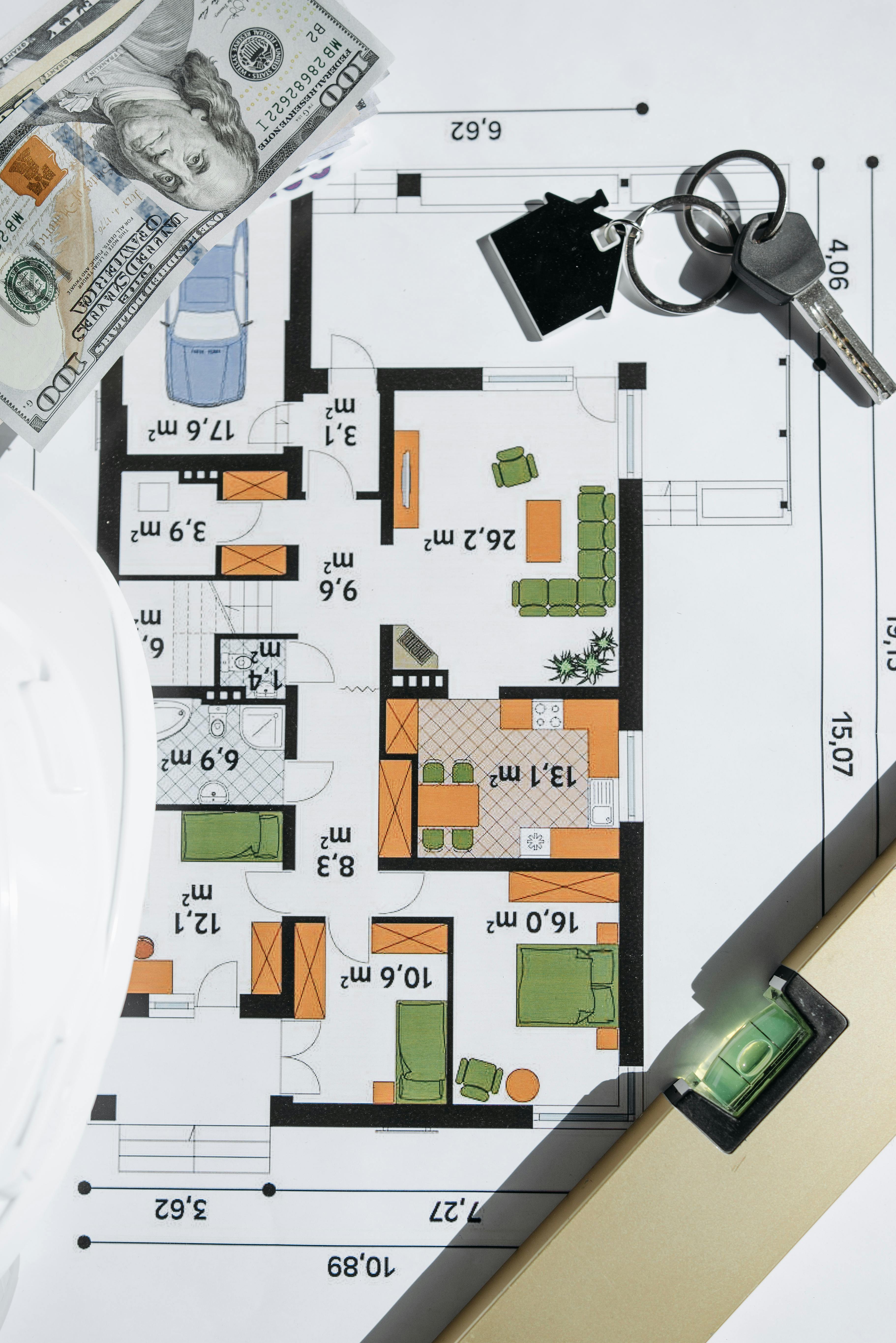
    Cash and house keys on a home plan, illustrating settlement cash and post-closing reserve planning together.
    Photo source: “Cash and Key on House Plan” by Pavel Danilyuk via Pexels.

    The goal here is simple: force every moving part onto one page before earnest money and calendar pressure make the decision harder to reverse.

    • Ask your lender for a line-by-line estimate that separates closing costs, prepaids, escrow, and the down payment rather than giving only a round-number cash figure.
    • Get an insurance estimate for the specific property or neighborhood before you anchor on the deal.
    • Ask how earnest money is handled, when it is due, and how it will be credited later.
    • Confirm whether property taxes are likely to reset or whether the local timing makes escrow heavier at your planned closing date.
    • Keep inspection, appraisal, moving, and utility-startup cash outside the settlement figure so you do not pretend those costs do not exist.
    • Protect post-closing reserves. A buyer who closes with no cushion may still be technically able to buy, but the move is fragile from day one.

    What this page can and cannot tell you

    This page can help you understand the structure of cash to close and the questions that usually change it. It cannot replace a property-specific Loan Estimate, an insurance quote for the actual address, a title-company fee sheet, or local tax timing. That is the line between useful planning and fake certainty.

    If you still need the monthly-payment side of the decision, move next to How Much House Can You Actually Afford?. If you need to lock the household budget before you even tour homes, use How to Set a Home Budget Before You Tour. If the payment stays tight even after income improved, compare that pressure in Why Higher Incomes Still Do Not Fix Housing Affordability.

    Bottom line

    Cash to close is not one mystery number at the end of the process. It is the combined effect of the down payment, closing charges, prepaids, escrow funding, credits, deposits, and timing. The buyer who understands that structure early can make a cleaner offer, protect reserves, and walk away sooner when the move only works by ignoring real cash pressure.


    How this article was produced

    This article was drafted with AI assistance and published by the Housing Pulse USA Editorial Team, which is responsible
    for what appears here. Sources are linked in the text, and photographs carry their own credit and
    licence.

    We do not claim that a person re-checks every article before it is published, and we do not
    present this as financial, legal, or tax advice. If you find something that looks wrong, tell us
    and we will correct or withdraw it.

  • How to Set a Home Budget Before You Tour

    How to Set a Home Budget Before You Tour


    By Published
    Housing Pulse USA publishes payment-first housing affordability, mortgage-cost, and home-buying explainers built for readers who need clearer household-cost decisions before they move.
    Reviewed against 3 linked public sources.


    Reader intent

    Questions this article answers

    1. How do you set a home budget before you tour?
    2. What should be included in a touring budget?
    3. How should cash to close affect the homes you visit?
    4. How much reserve should remain after closing?


    Set a home budget before you tour by working backward from the all-in monthly payment you can actually carry, the cash you still need at closing, and the reserve you refuse to destroy after the move. List prices are browsing filters. A real budget is a decision boundary.

    A calculator, receipts, and a pen on a desk, representing a pre-tour housing budget worksheet.
    Photo source: “Gray and Black Calculator on the Table” by RDNE Stock project via Pexels.

    Quick answer: Before you tour, set one housing number for the total monthly payment, one number for the maximum cash-to-close hit you can absorb, and one number for the minimum reserve you will keep after closing. If a property only works by breaking one of those three numbers, it is outside your real budget.
    This page is built for pre-offer decision work, not lender marketing. It uses official buyer-preparation, cost, and housing-affordability sources and links to Corrections and Contact because local tax, insurance, and payment assumptions can materially change the answer.

    Who this guide is for

    • Buyers who have started browsing homes but have not yet locked a defensible price ceiling.
    • Households that know what a lender might approve but do not yet trust that number as a safe payment.
    • Readers trying to connect the monthly payment, the upfront wire, and the reserve cushion into one plan.
    • Anyone who wants touring criteria that match real cash flow, not just listing-site optimism.

    Start with the monthly number, not the listing filter

    The first touring mistake is using list price as the budget. A listing price is only the sticker number before rate, taxes, insurance, HOA dues, repairs, and local friction are added. The more useful number is the all-in monthly payment that still leaves margin after your non-housing obligations and normal life are accounted for.

    The CFPB’s buyer-preparation flow is useful here because it tells readers to assess their actual spending and decide what they want to spend before they start shopping. That is the right order. If you tour first and budget second, the house starts setting the budget for you.

    Budget layer What belongs there Why it matters before a tour
    Net monthly income What actually lands after taxes, deductions, and payroll friction. This is the cash flow that will carry the home after closing.
    Non-housing fixed costs Debt payments, childcare, commuting, healthcare, and recurring support obligations. These narrow the payment range long before a lender quote does.
    All-in housing payment Principal, interest, taxes, insurance, HOA dues, and a repair reserve. This is the touring boundary, not the contract price.
    Cash to close Down payment, closing costs, prepaids, escrow funding, and any early due diligence costs. A house outside your liquidity range is already the wrong tour.
    Reserve floor The minimum savings you will keep after closing. Closing should not turn day-one ownership into a cash emergency.

    Build the payment stack before you build the price range

    Many buyers do the conversion in the wrong direction. They start from a list price, estimate a mortgage, and then hope the rest of the budget catches up. The safer method is the reverse: set the all-in monthly number first, then subtract taxes, insurance, HOA dues, and reserves to see how much principal and interest the home can realistically consume.

    That distinction matters because the CFPB separates the total monthly payment from principal and interest alone, and it explicitly notes that taxes, insurance, and sometimes mortgage insurance belong in the real monthly number. HOA dues are usually separate again, which means buyers who ignore them can understate the practical payment before they have even booked a tour.

    A person reviewing bills and a calculator while planning a home budget, illustrating the full monthly payment stack.
    Photo source: “Woman Counting Money at Desk at Home” by Karolina Grabowska via Pexels.
    What changes the answer fastest: rate quotes, local property taxes, insurance estimates, HOA dues, and the reserve amount you refuse to spend. If any of those are still placeholders, the touring budget is still provisional.

    Use a three-number touring rule

    A workable touring budget usually fits into three clear numbers. One number limits the total monthly payment. One number limits the maximum cash-to-close hit. One number protects the reserve cushion after the transaction. If a property violates any of the three, it should move out of the tour set.

    Touring rule Example question Why it protects you
    Monthly ceiling Can we still carry this payment if insurance or utilities run a little high? Keeps touring focused on homes that survive real life, not perfect-case math.
    Upfront cash ceiling Can we cover earnest money, settlement cash, and pre-closing bills without stretching? Stops the process from turning into a liquidity scramble.
    Reserve floor What will still be left after closing and move-in? Prevents a technically possible purchase from becoming a fragile one.

    What to verify before a home earns a tour slot

    • Ask for property-tax history and whether reassessment or tax timing could raise the payment.
    • Get an insurance estimate before emotionally committing to a property in a risk-sensitive area.
    • Check HOA dues, pending assessments, and any recurring neighborhood or community costs.
    • Estimate the full cash-to-close burden, not just the down payment.
    • Decide how much savings must remain after closing for repairs, moving costs, and ordinary surprises.
    • Stress-test the payment under more than one rate assumption before treating the home as affordable.

    How this guide fits the wider Housing Pulse USA decision web

    This page is the pre-tour filter, not the whole buying decision. Use it with the tighter payment math in How Much House Can You Actually Afford?, the liquidity map in What Counts as Cash to Close Before an Offer?, and the reserve test in How Much Emergency Savings Should You Have After Buying a House?. If the payment still feels tight even after income improved, continue to What Percentage of Take-Home Pay Is Too Much for Housing? and Why Higher Income Still Doesn’t Fix Housing Affordability.

    Bottom line

    The best time to set your budget is before the first tour, not after a house becomes emotionally expensive. A defensible home budget is one monthly ceiling, one upfront-cash ceiling, and one reserve floor that stay intact even when the details get more specific.

    Sources

    This page prioritizes official buyer-preparation and cost guides. Any scenario math is illustrative and should be checked against local taxes, insurance, and lender estimates for the actual homes you would consider.

    1. Consumer Financial Protection Bureau, “Assess your spending”
    2. Consumer Financial Protection Bureau, “Figure out how much you want to spend”
    3. Consumer Financial Protection Bureau, “Monthly Payment Worksheet”
    4. Consumer Financial Protection Bureau, “Difference between principal and interest and the total monthly payment”
    5. Consumer Financial Protection Bureau, “Are HOA dues included in my monthly mortgage payment?”
    6. Consumer Financial Protection Bureau, “What are all the costs of buying a home?”
    7. Fannie Mae, “Prepare for the Costs of Buying and Owning a Home”
    8. Freddie Mac, “Primary Mortgage Market Survey”

    How this article was produced

    This article was drafted with AI assistance and published by the Housing Pulse USA Editorial Team, which is responsible
    for what appears here. Sources are linked in the text, and photographs carry their own credit and
    licence.

    We do not claim that a person re-checks every article before it is published, and we do not
    present this as financial, legal, or tax advice. If you find something that looks wrong, tell us
    and we will correct or withdraw it.

  • How Much House Can You Actually Afford

    How Much House Can You Actually Afford?


    By Published
    Housing Pulse USA publishes payment-first housing affordability, mortgage-cost, and home-buying explainers built for readers who need clearer household-cost decisions before they move.
    Reviewed against 3 linked public sources.


    Reader intent

    Questions this article answers

    1. How much house can you actually afford?
    2. Why is lender approval different from a safe payment?
    3. What should be counted in the full monthly housing number?
    4. How should rates and reserves change the price range?


    The honest affordability question is not how much a lender may approve. It is how much housing payment you can carry after taxes, insurance, maintenance, debt, and normal life still fit. A payment-first budget is slower than a headline number, but it is the only version that protects buyers after closing.

    Quick answer: Start with the monthly payment you can safely carry, subtract taxes, insurance, HOA dues, and repair reserves, then convert what remains into a price range under multiple mortgage-rate scenarios. If the math only works under the most optimistic case, the home is not comfortably affordable.
    This guide uses payment-first budgeting logic and official housing-cost references. If a local tax rule, insurance quote, or HOA obligation materially changes the answer, use Corrections or Contact.

    Decision frame

    • Use take-home cash flow, not just gross salary or a lender maximum.
    • Budget the full housing stack: principal, interest, taxes, insurance, HOA dues, and repairs.
    • Stress-test the same payment under multiple rate scenarios before you trust the price range.
    • If the numbers stay too tight, compare the income problem in our affordability explainer with the supply-side option in our factory-built housing guide.
    A calculator and housing cost sheets on a desk, representing payment-first home affordability planning.
    Photo source: “Gray and Black Desk Calculator” by RDNE Stock project via Pexels.

    Start with the payment you can carry after closing

    Qualification is not the same as comfort

    Lenders measure ability to repay using their own underwriting rules, often anchored to gross income and debt-to-income calculations. That is useful for qualification. It is not the same as a buyer deciding what still leaves room for savings, repairs, transportation, food, and normal volatility after the first year of ownership.

    Take-home pay is the safer base number

    A household lives on money after payroll taxes, health insurance, retirement contributions, and other deductions. That is why buyers who only work from gross income can convince themselves a payment is manageable even when the monthly cash left after housing is far too thin.

    Budget line What to include Why it matters
    Net monthly income What actually lands in checking after taxes and deductions. This is the cash flow that has to absorb the payment every month.
    Non-housing fixed obligations Auto loans, student loans, childcare, minimum debt payments, and recurring care costs. These reduce what a household can safely commit to housing.
    Reserve target Emergency savings and a basic ownership repair buffer. Homeownership becomes fragile when every extra dollar is consumed by the mortgage.
    Comfortable all-in housing budget The monthly housing number that still leaves margin after the lines above. This is the only number worth translating into a price range.

    Build the full monthly housing stack before you translate it into a price

    The contract price is only one layer of affordability. A buyer has to cover the mortgage payment, property taxes, homeowners insurance, HOA dues where relevant, and a maintenance reserve that keeps the first broken appliance or roof leak from becoming a financial emergency.

    Cost layer What buyers often miss Decision question
    Principal and interest The same house can imply a much different payment after even a modest rate move. How much principal-and-interest payment can you support without using wishful thinking?
    Property taxes and insurance Escrow costs can vary sharply by ZIP code and can reset after a purchase. What is the real escrow burden on the homes you would actually tour?
    HOA dues and special assessments A lower list price can hide a much higher monthly obligation. Does the payment still work after association costs are included?
    Repairs and upkeep Budgets break when the buyer counts only the lender payment and nothing else. What happens if a major appliance, HVAC unit, or plumbing issue hits in year one?
    Practical rule: Deduct taxes, insurance, HOA dues, and reserves from your comfortable all-in housing budget first. Only then should you translate the remaining principal-and-interest budget into a loan size or purchase price.

    Translate the payment into a price range under multiple rate scenarios

    Example: the payment stays fixed, but the house budget moves

    Illustrative math can clarify how quickly rates change affordability. Assume a household decides its all-in housing budget is $2,650 per month. If taxes, insurance, HOA dues, and repair reserves consume about $800 of that number, the household has about $1,850 left for principal and interest. The table below shows how that same principal-and-interest budget maps to different loan sizes as rates move.

    Stress-test rate Approximate loan supported by $1,850 P&I Approximate purchase price with 10% down What changes
    6.0% About $308,560 About $343,000 before closing costs More purchasing room, but only if taxes and insurance assumptions are accurate.
    6.5% About $292,690 About $325,000 before closing costs The same household loses price range without any change in income.
    7.0% About $278,070 About $309,000 before closing costs A tighter rate environment can erase tens of thousands of dollars of buying power.

    This is why buyers should not anchor on a single mortgage quote. A rate-sensitive range is more useful than one optimistic number, especially when you still need room for closing costs, moving costs, and early repairs.

    A buyer counting cash beside receipts at a desk, illustrating take-home-pay and reserve planning.
    Photo source: “Woman Counting Money at Desk at Home” by Karolina Grabowska via Pexels.

    The comfortable payment should survive a bad month, not only a perfect month

    Use a scenario that reflects overtime fading, commission income softening, insurance premiums rising, or a small repair hit in the first year. If the payment works only when nothing goes wrong, the house is still too expensive for that household.

    Who this framework protects most

    First-time buyers translating online estimates into real offers

    First-time buyers are most exposed to optimistic calculators that undercount escrow and upkeep. A payment-first method forces the hard question early, before an approval letter turns into a house budget that leaves no recovery room.

    Move-up buyers replacing a low legacy mortgage

    Households with an older low-rate mortgage should compare the replacement payment, not just the new home itself. In many cases the decision is really about whether the new payment justifies giving up the old financing terms.

    Households with uneven or crowded budgets

    Variable income, childcare, student loans, elder care, or high commuting costs all narrow the margin that a lender approval might ignore. The more uneven the budget, the more valuable it is to size the house from the payment down instead of from the listing up.

    What to do if the math still fails

    Reduce payment risk, not just list price

    A cheaper listing does not always mean a better payment. Some buyers improve the math more by changing ZIP code, HOA exposure, property-tax burden, or insurance profile than by chasing a slightly lower sticker price in the same cost structure.

    Treat wage growth as helpful, not decisive

    If you are assuming that a raise alone will solve the problem, compare your situation with Why Higher Incomes Still Do Not Fix Housing Affordability. Better pay can help, but it often arrives too slowly to offset the full payment stack.

    Look at alternative supply paths when the local stock stays too expensive

    If the budget only works when the home itself costs less or arrives faster, compare the supply-side option in Can Factory-Built Homes Lower Housing Costs Faster?. That route does not fix land, zoning, or financing friction, but it can change the delivered-cost equation in some markets.

    Decision checklist before you make an offer

    • Write down your net monthly income, not just salary or preapproval.
    • Subtract non-housing debt, childcare, and recurring obligations first.
    • Set a reserve target for repairs and emergencies before the purchase.
    • Estimate taxes, insurance, HOA dues, and maintenance for the exact homes you are considering.
    • Stress-test the remaining principal-and-interest budget across at least three rate assumptions.
    • Translate the payment into a price range only after the steps above are complete.
    • If the range feels too tight, change the strategy before you change the facts.

    Update history and evidence standard

    Updated April 10, 2026: this article was built as the affordability decision hub for Housing Pulse USA. It prioritizes primary consumer-finance, mortgage-rate, and housing-cost references, clearly labels illustrative math, and links readers toward correction and policy pages when a local fact pattern could change the answer.

    Bottom line

    You can actually afford the home whose all-in monthly cost still works after closing, after routine repairs, and after a less-than-perfect month. That number is often lower than a lender maximum and more useful than a headline price range.

    The strongest buyers are not the ones who stretch to the largest approval. They are the ones who can translate real monthly capacity into a price band, walk away when the math breaks, and compare alternative paths before locking themselves into a payment they cannot comfortably carry.

    Sources

    Evidence standard: primary consumer-finance, rate, and housing-cost references. Illustrative payment scenarios are editorial math, not live lender quotes.

    1. Consumer Financial Protection Bureau, “What is a debt-to-income ratio?”
    2. Consumer Financial Protection Bureau, “Difference between principal and interest and the total monthly payment”
    3. Consumer Financial Protection Bureau, “Are HOA dues included in my monthly mortgage payment?”
    4. Consumer Financial Protection Bureau, “Figure out how much you want to spend”
    5. Consumer Financial Protection Bureau, “Monthly Payment Worksheet”
    6. Fannie Mae, “Prepare for the Costs of Buying and Owning a Home”
    7. Freddie Mac, “Primary Mortgage Market Survey”
    8. HUD USER, “Defining Housing Affordability”
    9. Federal Housing Finance Agency, “House Price Index”

    How this article was produced

    This article was drafted with AI assistance and published by the Housing Pulse USA Editorial Team, which is responsible
    for what appears here. Sources are linked in the text, and photographs carry their own credit and
    licence.

    We do not claim that a person re-checks every article before it is published, and we do not
    present this as financial, legal, or tax advice. If you find something that looks wrong, tell us
    and we will correct or withdraw it.
  • How Much Emergency Savings Should You Have After Buying a House?

    How Much Emergency Savings Should You Have After Buying a House?


    By Published
    Housing Pulse USA publishes payment-first housing affordability, mortgage-cost, and home-buying explainers built for readers who need clearer household-cost decisions before they move.
    Reviewed against 3 linked public sources.


    Reader intent

    Questions this article answers

    1. How much emergency savings should you have after buying a house?
    2. Should closing wipe out all of your cash?
    3. What counts as a post-closing reserve?
    4. How do cash to close and emergency savings fit together?


    There is no single dollar amount that works for every buyer after closing. The safer question is whether you will still have enough cash left for the full monthly payment stack, ordinary move-in costs, and the first unexpected repair or bill shock that ownership sends your way.

    House keys, a calculator, and coffee on a table, representing a home purchase that still needs reserve cash after closing.
    Photo source: House Keys, a cup of Coffee and Measurement Tools by Abbey Chapman via Pexels.

    Quick answer: You should still have emergency savings after buying a house. If closing empties your reserves so completely that taxes, insurance changes, repairs, or even a short income interruption would immediately destabilize the budget, the deal is too thin even if the mortgage itself still qualifies.
    This page uses public housing and budgeting sources. It does not manufacture a fake “perfect reserve number.” Where the article uses planning bands or stress-test language, those are labeled as editorial decision tools, not lender guarantees. Use Corrections or Contact if a cited source or assumption materially changes.

    Who this guide is for

    Use this page when you can technically assemble the down payment and cash to close, but you are not sure what should still remain in savings after the transaction is done.

    • First-time buyers worried about draining too much cash at the closing table.
    • Households trying to judge whether “three to six months” is realistic, excessive, or still not enough for their version of ownership risk.
    • Readers pairing monthly affordability with liquidity planning.
    • Anyone deciding whether to buy now, wait longer, or change the target home because the reserve cushion looks too weak.

    The shortest useful answer: closing should not erase your margin

    A buyer who reaches closing with no meaningful cash left is not just “fully invested.” That buyer is exposed. Homeownership starts with a monthly payment, but it does not stop there. The moment the deal closes, the household still has to carry taxes, insurance, utilities, repairs, furnishings, moving friction, and any gap between the lender estimate and the bills that show up in the real world.

    That is why the reserve question cannot be separated from the affordability question. If your post-closing bank balance is too thin to absorb a routine repair, deductible, appliance failure, tax adjustment, or a short income interruption, the move may be mathematically possible and still structurally weak.

    Reserve layer Why it matters after closing What usually breaks first
    Basic emergency cash Protects against the first bad month, income disruption, or unplanned bill. The household starts leaning on cards or raiding other savings immediately.
    Move-in and setup cash Covers boxes, utility transfers, lock changes, small fixes, and essential furnishings. The emergency fund gets quietly spent on predictable move-in friction.
    Repair and maintenance cushion Ownership surfaces costs that renting previously absorbed. A small repair becomes debt because no reserve line was left intact.
    Tax and insurance drift buffer Protects the budget when early estimates turn out to be soft. Escrow or billing changes land before the household has rebuilt savings.

    What official home-buying sources actually point toward

    The CFPB’s Figure out how much you want to spend page tells buyers to subtract money needed for moving costs, furnishings, renovations, and an emergency cushion when calculating the cash available for closing. That means the CFPB’s own planning flow does not treat “all cash into closing” as the ideal. It treats reserve protection as part of the decision.

    The CFPB’s Ready to buy a home? checklist pushes in the same direction by asking whether you can still pay property taxes, homeowners insurance, maintenance, and utilities. Fannie Mae is even more explicit in Prepare for the Costs of Buying and Owning a Home, where it recommends preparing for unexpected expenses and names a rainy-day fund of three to six months of essential expenses as a safety net.

    What that means in practice: there is no universal post-closing dollar figure that is correct for everyone, but official buyer guidance clearly points away from draining reserves to zero. The safer plan is the one that leaves enough cash for ownership friction you already know is possible.
    A young couple sitting among moving boxes in a new home, representing the move-in costs and transition period after closing.
    Photo source: Young Couple Enjoying New Home Among Moving Boxes by Vitaly Gariev via Pexels.

    Cash to close and post-closing cushion are the same decision, not separate ones

    One of the most common mistakes in home buying is solving the closing-table number and only later asking what remains. That order is backwards. If you need to stretch every liquid dollar to reach closing, then the “reserve plan” is already telling you something about the deal quality.

    This is why our cash-to-close guide and reserve planning belong together. The down payment, lender fees, taxes, insurance prepaids, and escrow funding decide whether you can close. The cushion decides whether the deal is resilient after closing. Buyers who solve only the first half often discover that the second half was the real problem.

    Question What it decides Why you cannot ignore the other half
    Can you bring enough cash to close? Whether the transaction can actually fund. A closing plan that wipes out reserves can still leave the move too fragile.
    Can you still carry the monthly payment? Whether taxes, insurance, HOA dues, and debt still fit every month. A payment that fits on paper can still fail if repairs and move-in costs depleted cash too far.
    Can the household survive the first surprise? Whether the move is sturdy rather than merely possible. Without a cushion, the first repair or billing shift can turn ownership into a debt event.

    What should still be inside the cushion after closing

    A post-closing reserve is not just a generic emergency fund with a new name. For a buyer, it usually needs to absorb several layers at once: one ordinary emergency, move-in friction, at least one early ownership surprise, and the possibility that estimates for taxes, insurance, or utilities were not conservative enough.

    Freddie Mac’s Budgeting for Upfront Homebuying Costs is helpful here because it treats upfront cash as more than the down payment. Appraisals, inspections, earnest money, and closing costs all compete with the same pool of liquid dollars. If all of those costs consume every last bit of liquidity, the household is relying on smooth conditions right when housing tends to introduce new friction.

    Cash and house keys resting on a home plan, representing the reserve cash that still matters after purchase.
    Photo source: Cash and Key on House Plan by Pavel Danilyuk via Pexels.

    What this reserve often has to absorb first

    • Moving-company, utility-transfer, and lock-change costs.
    • Appliance, plumbing, roof, HVAC, or deductible-level repair surprises.
    • Property-tax or insurance numbers that come in above the early estimate.
    • Furniture and small setup expenses that felt optional until move-in day.
    • A short income disruption or a month where several unrelated bills hit at once.

    A practical reserve framework: strong, borderline, and too thin

    Fannie Mae’s three-to-six-month safety-net guidance is useful because it creates a serious planning floor without pretending that every household should carry the exact same number. A low-debt buyer in a stable job and lower-maintenance home may be comfortable closer to the lower end. A household with thin monthly margin, variable income, high insurance risk, or an older home should assume the upper end may be more appropriate or even insufficient.

    Condition What it usually means Decision signal
    Strong cushion Closing leaves enough liquidity for essentials, move-in costs, and at least one unpleasant surprise without immediate debt stress. The deal may still need monthly-payment testing, but the liquidity side is healthier.
    Borderline cushion Closing works, but the reserve rebuild depends on smooth months and no meaningful repair or billing surprise. Consider a smaller purchase, a longer saving runway, or tighter assumptions before you commit.
    Too thin Closing empties reserves or leaves so little cash that a normal ownership problem becomes an immediate financing problem. The purchase is not just tight. It is fragile. Waiting or changing the target home is usually cleaner than forcing it.

    What this page can and cannot decide for you

    This page can help you judge whether your post-closing cash position looks sturdy, borderline, or too thin. It cannot replace a property-specific insurance quote, tax estimate, inspection result, HOA document review, or a household-level risk review. Those details decide whether the same reserve number is conservative or reckless.

    If you still need the monthly side of the decision, use our take-home-pay guide and our affordability explainer. If you are deciding whether the upfront cash itself is realistic, go back to What Counts Toward Cash to Close Before an Offer.

    Bottom line

    How much emergency savings should you have after buying a house? Enough that the move still works after closing, not just at closing. If the purchase leaves no room for repair shocks, billing drift, or a bad month, the reserve cushion is too thin and the deal is weaker than it looks.

    Next step: Pair this reserve guide with the cash-to-close explainer, the take-home-pay stress test, and the pre-tour budget guide so liquidity and monthly pressure are judged together.


    How this article was produced

    This article was drafted with AI assistance and published by the Housing Pulse USA Editorial Team, which is responsible
    for what appears here. Sources are linked in the text, and photographs carry their own credit and
    licence.

    We do not claim that a person re-checks every article before it is published, and we do not
    present this as financial, legal, or tax advice. If you find something that looks wrong, tell us
    and we will correct or withdraw it.
  • Can Factory-Built Homes Really Lower Housing Costs?

    Can Factory-Built Homes Really Lower Housing Costs?


    By Published
    Housing Pulse USA publishes payment-first housing affordability, mortgage-cost, and home-buying explainers built for readers who need clearer household-cost decisions before they move.
    Reviewed against 3 linked public sources.


    Reader intent

    Questions this article answers

    1. Can factory-built homes really lower housing costs?
    2. What erases factory-built savings?
    3. How do land and site work affect delivered cost?
    4. How should buyers compare factory-built and site-built options?


    Factory-built housing can shorten parts of the build process and make cost forecasting more predictable, but buyers do not close on factory efficiency alone. Land, site work, local approvals, transportation, and financing terms still decide whether the lower production cost survives all the way to the monthly payment. The right comparison is not factory quote versus site-built quote. It is delivered payment versus the budget in your actual affordability framework.

    Quick answer: Factory-built homes can lower some costs faster than site-built construction, but the savings only become real for buyers when the delivered, installed, and financed cost stays meaningfully below the alternative.

    Decision frame

    • The factory sticker price is not the buyer’s final price.
    • Repeatable production can help, but site prep and transport can erase the gain quickly.
    • Financing and titling often decide whether the buyer keeps the savings or loses them to the loan structure.
    • The honest comparison is delivered monthly payment versus a realistic site-built alternative.
    A factory-built home exterior, illustrating the delivered-cost comparison between alternative housing formats.
    Photo source: “House Made of Containers” by David Olaniyi via Pexels.

    Where factory-built homes can create real speed or cost gains

    Controlled production can reduce schedule friction

    The strongest argument for factory-built housing is repeatability. Controlled indoor production can reduce weather delays, standardize labor sequences, and make material use more predictable. That can shorten part of the project timeline and make the build phase less chaotic than a one-off site-built job.

    Repeatable plans tend to benefit more than custom one-offs

    The savings are usually strongest when builders repeat a plan across many sites or units. Standard floor plans, recurring materials, and stable production runs are where factory methods have the clearest edge over fragmented local construction.

    But those gains mostly live in the production phase. They do not automatically remove the costs and delays waiting at the lot line.

    Where the savings can disappear before the buyer closes

    The cost story changes once the home has to be delivered, installed, financed, insured, and approved locally. That is why factory-built housing can be cheaper to build but still only modestly cheaper to own.

    Cost layer How factory methods can help How the savings can be lost
    Home production More standardized labor and fewer weather interruptions can improve consistency. Buyers can anchor on the factory number and ignore the rest of the stack.
    Transport and installation Shorter production can reduce carrying costs if delivery and setup stay simple. Distance, road access, crane work, and setup complexity can narrow the gap quickly.
    Land and site work Straightforward sites preserve more of the production advantage. Grading, foundations, utilities, and local fees can dominate the final bill.
    Financing and insurance Stable real-estate-style financing can help buyers keep the upfront price edge. Less favorable loan structures or titling choices can rebuild the payment.
    A container-style home on site, illustrating how delivery and site work affect factory-built housing costs.
    Photo source: “House-shaped Container House” by Wang Xin via Pexels.

    Land and site work are often the real bottleneck

    Land is still land, even when the house is built in a factory. If the lot needs expensive grading, utility trenching, road access work, a permanent foundation, or difficult inspection sequencing, a lower-cost unit can stop looking inexpensive very quickly.

    Financing can rewrite the answer

    The financing path for manufactured or factory-built homes is not always identical to a traditional site-built mortgage. Whether the home is titled as personal property or real estate, whether the land is owned, and whether the installation meets permanent-foundation expectations can all change the monthly payment in ways buyers underestimate.

    Who is most likely to benefit and who may not

    Buyers with straightforward sites and realistic financing

    The best cases are buyers with accessible lots, manageable site prep, and financing terms that let the home function like real estate rather than a higher-cost stopgap loan. When those conditions line up, factory-built housing can meaningfully improve speed and sometimes reduce the delivered cost.

    Local officials trying to add supply quickly

    Local governments and planners can also benefit when factory-built models fit the zoning and inspection path without repeated redesign or appeals. In those cases, the format can help the market add units faster than slow, custom, site-built delivery alone.

    Buyers in high-land-cost or high-friction markets

    The weaker cases are the ones where land is already expensive, local approvals are uncertain, or transport and setup are unusually difficult. In those markets, factory-built housing may still help supply, but the savings do not always reach the household.

    Questions that decide whether the savings are real

    • What is the full delivered and installed price, not just the factory quote?
    • Who pays for grading, foundation work, utility hookups, permit delays, and transport overruns?
    • Will the home be financed and titled in a way that preserves the price advantage?
    • What local zoning or placement rules could delay or block occupancy?
    • How does the all-in monthly payment compare with the budget range in How Much House Can You Actually Afford? A Payment-First Guide?
    Decision lens:

    The real win is not a lower factory sticker price. The real win is a lower delivered monthly obligation that survives land, site work, local approvals, and financing.

    How this fits the broader affordability problem

    Factory-built housing is one supply-side lever, not a complete affordability fix. Buyers still live inside the same rate environment, insurance environment, and local land market discussed in our housing affordability guide and the payment framework in our affordability budget hub. Faster production helps only when the rest of the payment stack does not erase the gain before closing.

    That is why factory-built housing should be judged as part of a broader property-decision framework. The question is not whether the factory is efficient. The question is whether the household comes out with a materially better ownership outcome.

    Update history and evidence standard

    Updated April 10, 2026: this refactor tightened the article around delivered-cost and financing decision logic, linked the affordability budget hub, clarified which buyers benefit most, and emphasized primary manufactured-housing and consumer-finance sources over softer commentary. If a local zoning, foundation, or titling rule changes the decision path in your market, use Contact so the editorial team can review it.

    Bottom line

    Factory-built homes can lower some housing costs faster than site-built construction because the production process is more standardized and less exposed to weather and subcontractor chaos. But the buyer only feels those gains when land, site work, local rules, and financing let the production savings survive all the way to occupancy.

    So the honest answer is yes, conditionally. Factory-built housing can help, but it becomes a meaningful affordability tool only when the delivered and financed result is truly better, not just the factory sticker price.

    Continue the decision web

    Judge factory-built options against your affordability range, your pre-tour budget, and your full cash-to-close estimate so the factory quote is not mistaken for the real housing answer.


    How this article was produced

    This article was drafted with AI assistance and published by the Housing Pulse USA Editorial Team, which is responsible
    for what appears here. Sources are linked in the text, and photographs carry their own credit and
    licence.

    We do not claim that a person re-checks every article before it is published, and we do not
    present this as financial, legal, or tax advice. If you find something that looks wrong, tell us
    and we will correct or withdraw it.

  • Buy Before You Sell? A Payment-First Move Risk Guide

    Buy Before You Sell? A Payment-First Move Risk Guide

    Written by
    Reviewed by Housing Pulse USA Editorial Team
    Published

    Housing Pulse USA Editorial Team, is the primary public byline for Housing Pulse USA. This page keeps move timing, payment overlap, closing cash, reserve pressure, and ownership stress visible before a buyer writes an offer.

    Source set: CFPB, Freddie Mac, and Fannie Mae. Freddie Mac’s PMMS rate tracker stays in the source set because overlap-payment assumptions can drift after publication. Editorial inferences are labeled when they go beyond what the source documents state directly.

    Quick answer: Buy before you sell only when the overlap payment, cash at closing, reserve floor, and ownership stress all stay intact without assuming a perfect sale timeline. If the move only works when your current home sells fast, at the hoped-for price, and without extra repairs, the risk is already too concentrated.
    This guide keeps equity and “wealth-building” claims secondary to liquidity and durability. Sale proceeds are not the same thing as ready cash, and home equity is not a reserve plan if the move needs perfect timing to stay healthy.

    Buy before you sell is a move-risk decision before it is a lifestyle upgrade. This payment-first move risk guide starts with the overlap months: two housing payments, uncertain sale proceeds, and the chance that closing cash or reserves get thinner before the old house is gone. The real question is whether buying before you sell still works when listing timing, tax drift, repairs, and ordinary life stay visible.

    Who this guide is for

    Use this page if you are tempted to shop for the next house before the current one is fully out of the way.

    Keep the move-risk stack in the right order

    The cleanest way to think about this decision is the same order Housing Pulse USA uses everywhere else: first the monthly payment, then cash at closing, then reserve pressure, then ownership stress. Buyers get into trouble when they start with the future story instead of the present overlap. They imagine the old mortgage disappearing, the sale proceeds arriving on time, and the new home settling into a normal budget right away. That is the best-case ending. The risk lives in the months before that ending is guaranteed.

    The CFPB’s Ready to buy a home? page is blunt about the basic reality: homeowners still have to pay repairs, taxes, insurance, and any HOA dues that apply, and if they want to move they normally try to sell the current home first before buying another one. That is not a command that every buyer must follow. It is a reminder about where the baseline risk sits. The more your move departs from that baseline, the more deliberate your math has to become.

    Decision layer What to test first What buyers miss What failure looks like
    Monthly payment Model the overlap months with both housing obligations and the full payment stack on the next home. The new payment is modeled in isolation, or the old home is mentally treated as already sold. One slow sale month turns the budget into a scramble.
    Cash at closing Separate required cash from hoped-for sale proceeds and price the timing gap honestly. Down payment, closing costs, moving cash, listing prep, and bridge expenses collapse into one blurry “equity” assumption. The move depends on the old home closing at exactly the right time and value.
    Reserve pressure Measure what cash remains after settlement, listing work, moving costs, and one ordinary surprise. Every available dollar is assigned to the transaction and none is left for taxes, repairs, or reset delays. A small repair or a tax reset wipes out the cushion immediately.
    Ownership stress Ask whether the move still leaves room for normal life after the keys change hands. Stress is treated as a mindset issue instead of the final signal that the move is undercapitalized. The household feels trapped even though the closing technically succeeded.

    Start with the overlap payment, not the hoped-for payment after the sale

    The CFPB tells home shoppers to calculate the total monthly payment and keep updating their budget while they search. That advice becomes more important, not less, when you are buying before selling. The test is not simply whether the next principal-and-interest number looks manageable. The test is whether the overlap period still works after taxes, insurance, HOA dues, utilities, commuting changes, and the current home’s remaining costs stay on the table at the same time. Freddie Mac’s Mortgage Rates tracker is a reminder that even modest rate movement can rewrite the monthly number faster than a buyer’s memory of an earlier quote.

    This is where the existing Housing Pulse USA sequence matters. Before the tours start, use the pre-tour budget guide to lock the ceiling. Then use the affordability guide to pressure-test the full payment stack. If you skip those steps and jump straight to the next listing, the sell-side timeline ends up doing your budgeting for you.

    Editorial inference, clearly labeled: if the overlap months only work after you strip out taxes, understate insurance, or assume the old home will be sold before the first hard month arrives, the move is not tight but manageable. It is structurally weak.

    Treat closing cash as separate from expected sale proceeds

    The CFPB’s buying-cost guide and Freddie Mac’s upfront-cost budgeting guide both point to the same operational problem: the move consumes cash in stages. Earnest money, inspections, appraisal, listing prep, moving expenses, lender and title charges, prepaids, and escrow funding do not all happen at the same moment. Buyers who say “the old house will cover it” often mean “the old house will cover it eventually.” That is not the same as having the right money in the right week.

    This is why the new article has to stay chained to What Counts as Cash to Close Before an Offer?. If your next purchase depends on sale proceeds from the current house, map the timing gap first. What cash is already yours? What cash only exists if the old home closes on schedule? What happens if the buyer for your current home asks for repairs or concessions after inspection? The more of the next purchase that depends on unresolved sale money, the less true your cash-to-close number really is.

    A payment-first buyer should also keep property taxes visible on both sides of the move. The next home may reassess at a higher value, while the current home’s carrying cost can still run until the sale closes. That is why the tax-shock checklist belongs inside this decision instead of after it.

    Protect a reserve floor after the move

    A move that technically closes can still be the wrong move if it burns through the reserve floor. Fannie Mae’s buyer-cost guide tells households to prepare for unexpected expenses and describes a rainy-day fund of three to six months of essential expenses as a safety net. That does not mean every buyer needs the same exact post-closing number. It does mean official buyer guidance does not treat zero leftover cash as a healthy finish line.

    This is where buy-before-sell decisions become more dangerous than a standard purchase. The current home may still need cleaning, repairs, staging, utility carry, or price cuts. The next home may need locks, appliances, paint, or immediate fixes. If the move uses up almost everything before those normal expenses show up, the reserve failure is already built into the plan. Readers who need the reserve side in more detail should continue with How Much Emergency Savings Should You Have After Buying a House?.

    Practical reserve test: after the purchase closes, the old home is prepared for sale, and one ordinary surprise lands, the household should still have a visible cash buffer. If that sentence already sounds unrealistic, the move is depending on perfect timing rather than durable cash.

    Use contingencies and timing rules to contain move risk

    The CFPB’s home-search guidance tells buyers to use financing and inspection contingencies. For a buy-before-sell household, those protections matter because the timeline is doing more than protecting the house choice. It is protecting the cash sequence. Inspection issues on the new purchase, repair negotiations on the old sale, appraisal drift, or a delayed closing can all push the overlap period longer than planned.

    This article is not a blanket argument that no one should buy before selling. It is an argument that the decision should be framed as a timing-risk decision, not a confidence decision. A strong buyer can still make a weak move if the cash schedule only works under one favorable timeline. If you are counting on the current home to do all of the heavy lifting, the safer move may be to finish the sell-first path before the next tour calendar fills up.

    Ownership stress is the final gate, not an afterthought

    Ownership stress is what remains after the mortgage approval, the keys, and the move are done. It shows up when the household starts deferring repairs, draining checking for ordinary bills, furnishing on credit because cash is gone, or hoping the tax bill will somehow stay low enough to avoid another reset. The problem is not emotional fragility. The problem is a move that closed without enough room to live inside it.

    Housing Pulse USA treats that stress as the final decision layer because it exposes the parts of the budget that optimistic narratives hide. If the justification for buying before selling turns into “we will rebuild the cushion later” or “the equity will make it worth it,” the move is already slipping away from payment discipline. The corrective framing stays the same: monthly payment first, then cash at closing, then reserves, then stress. For the boundary on the wealth story, see How Housing Builds Wealth Only When the Payment Still Works and What Percentage of Take-Home Pay Is Too Much for Housing?.

    How this article fits the Housing Pulse USA payment desk

    This page is meant to sit inside the live site structure, not beside it. Start with the homepage payment map for the monthly payment to ownership stress sequence. Use the before-you-tour path to pressure-test affordability and closing cash before new listings dictate the decision. Return to the ownership stress section when the move starts looking feasible on paper but fragile in practice. The live archive route for this desk remains Housing Updates.

    Next reads inside the same payment-first sequence

    Route back into the same Housing Pulse USA desk

    Readers using this page as a move-risk checkpoint should not stop here. The same payment-first desk keeps the monthly payment, cash-to-close, reserve, and ownership-stress sequence visible across the linked routes below so the next step stays inside the same framework instead of drifting into isolated calculators.

    Trust, correction, and follow-up routes

    If a number changes, a route breaks, or a source needs re-checking, the correction path should stay visible. These routes keep the article connected to the site’s review, contact, and adjacent decision surfaces instead of behaving like a detached one-off explainer.

    Sources

    1. Consumer Financial Protection Bureau: Ready to buy a home?
    2. Consumer Financial Protection Bureau: Find the right home
    3. Consumer Financial Protection Bureau: What are all the costs of buying a home?
    4. Freddie Mac: Budgeting for Upfront Homebuying Costs
    5. Freddie Mac: Mortgage Rates
    6. Fannie Mae: Prepare for the Costs of Buying and Owning a Home

    How this article was produced

    This article was drafted with AI assistance and published by the Housing Pulse USA Editorial Team, which is responsible
    for what appears here. Sources are linked in the text, and photographs carry their own credit and
    licence.

    We do not claim that a person re-checks every article before it is published, and we do not
    present this as financial, legal, or tax advice. If you find something that looks wrong, tell us
    and we will correct or withdraw it.