Can Factory-Built Homes Really Lower Housing Costs?
Short answer: Factory-built homes help only when delivered cost, land, site work, and financing still beat the realistic site-built alternative.
Questions this article answers
- Can factory-built homes really lower housing costs?
- What erases factory-built savings?
- How do land and site work affect delivered cost?
- How should buyers compare factory-built and site-built options?
Factory-built housing can shorten parts of the build process and make cost forecasting more predictable, but buyers do not close on factory efficiency alone. Land, site work, local approvals, transportation, and financing terms still decide whether the lower production cost survives all the way to the monthly payment. The right comparison is not factory quote versus site-built quote. It is delivered payment versus the budget in your actual affordability framework.
Decision frame
- The factory sticker price is not the buyer’s final price.
- Repeatable production can help, but site prep and transport can erase the gain quickly.
- Financing and titling often decide whether the buyer keeps the savings or loses them to the loan structure.
- The honest comparison is delivered monthly payment versus a realistic site-built alternative.
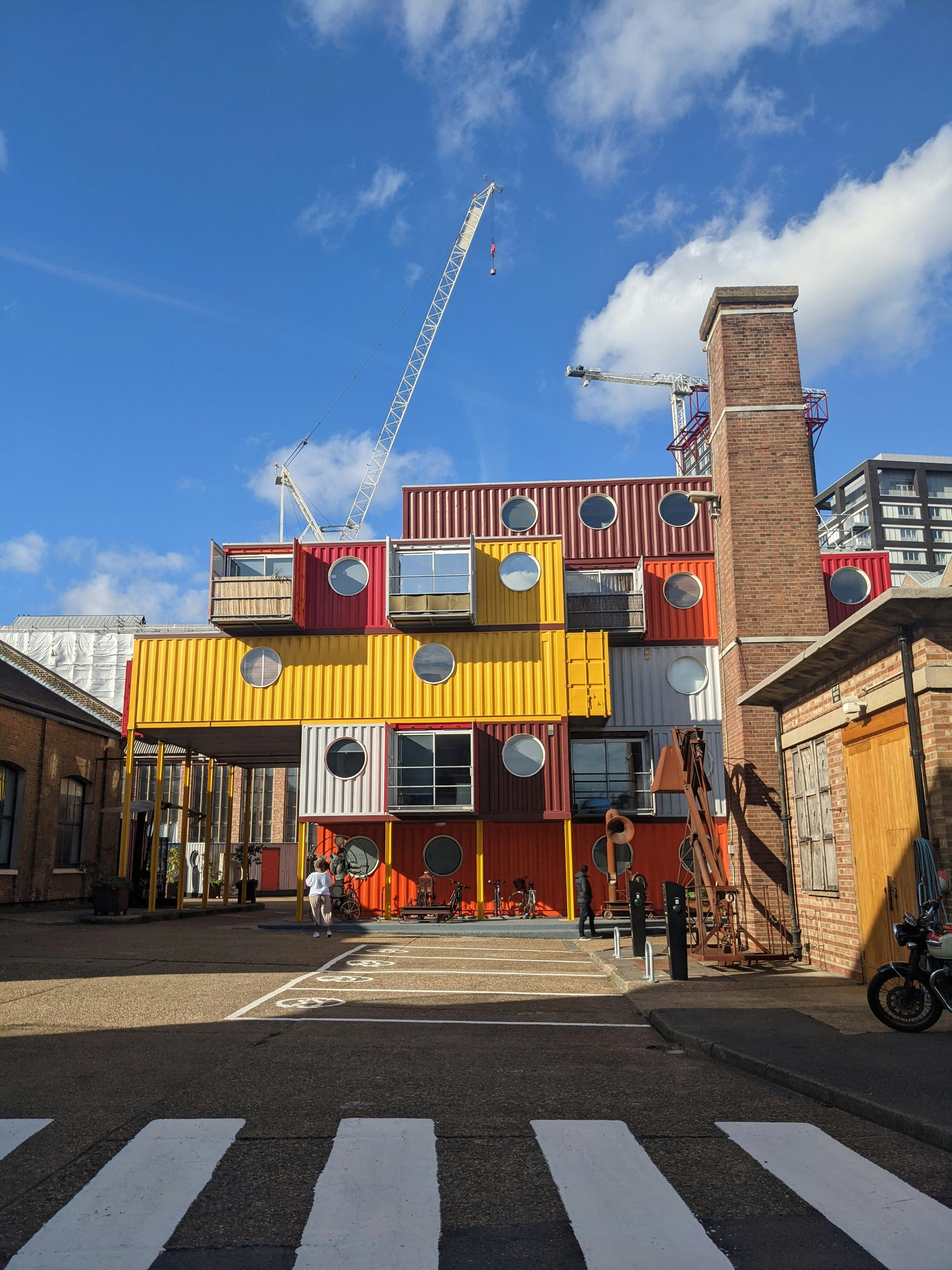
Where factory-built homes can create real speed or cost gains
Controlled production can reduce schedule friction
The strongest argument for factory-built housing is repeatability. Controlled indoor production can reduce weather delays, standardize labor sequences, and make material use more predictable. That can shorten part of the project timeline and make the build phase less chaotic than a one-off site-built job.
Repeatable plans tend to benefit more than custom one-offs
The savings are usually strongest when builders repeat a plan across many sites or units. Standard floor plans, recurring materials, and stable production runs are where factory methods have the clearest edge over fragmented local construction.
But those gains mostly live in the production phase. They do not automatically remove the costs and delays waiting at the lot line.
Where the savings can disappear before the buyer closes
The cost story changes once the home has to be delivered, installed, financed, insured, and approved locally. That is why factory-built housing can be cheaper to build but still only modestly cheaper to own.
| Cost layer | How factory methods can help | How the savings can be lost |
|---|---|---|
| Home production | More standardized labor and fewer weather interruptions can improve consistency. | Buyers can anchor on the factory number and ignore the rest of the stack. |
| Transport and installation | Shorter production can reduce carrying costs if delivery and setup stay simple. | Distance, road access, crane work, and setup complexity can narrow the gap quickly. |
| Land and site work | Straightforward sites preserve more of the production advantage. | Grading, foundations, utilities, and local fees can dominate the final bill. |
| Financing and insurance | Stable real-estate-style financing can help buyers keep the upfront price edge. | Less favorable loan structures or titling choices can rebuild the payment. |

Land and site work are often the real bottleneck
Land is still land, even when the house is built in a factory. If the lot needs expensive grading, utility trenching, road access work, a permanent foundation, or difficult inspection sequencing, a lower-cost unit can stop looking inexpensive very quickly.
Financing can rewrite the answer
The financing path for manufactured or factory-built homes is not always identical to a traditional site-built mortgage. Whether the home is titled as personal property or real estate, whether the land is owned, and whether the installation meets permanent-foundation expectations can all change the monthly payment in ways buyers underestimate.
Who is most likely to benefit and who may not
Buyers with straightforward sites and realistic financing
The best cases are buyers with accessible lots, manageable site prep, and financing terms that let the home function like real estate rather than a higher-cost stopgap loan. When those conditions line up, factory-built housing can meaningfully improve speed and sometimes reduce the delivered cost.
Local officials trying to add supply quickly
Local governments and planners can also benefit when factory-built models fit the zoning and inspection path without repeated redesign or appeals. In those cases, the format can help the market add units faster than slow, custom, site-built delivery alone.
Buyers in high-land-cost or high-friction markets
The weaker cases are the ones where land is already expensive, local approvals are uncertain, or transport and setup are unusually difficult. In those markets, factory-built housing may still help supply, but the savings do not always reach the household.
Questions that decide whether the savings are real
- What is the full delivered and installed price, not just the factory quote?
- Who pays for grading, foundation work, utility hookups, permit delays, and transport overruns?
- Will the home be financed and titled in a way that preserves the price advantage?
- What local zoning or placement rules could delay or block occupancy?
- How does the all-in monthly payment compare with the budget range in How Much House Can You Actually Afford? A Payment-First Guide?
The real win is not a lower factory sticker price. The real win is a lower delivered monthly obligation that survives land, site work, local approvals, and financing.
How this fits the broader affordability problem
Factory-built housing is one supply-side lever, not a complete affordability fix. Buyers still live inside the same rate environment, insurance environment, and local land market discussed in our housing affordability guide and the payment framework in our affordability budget hub. Faster production helps only when the rest of the payment stack does not erase the gain before closing.
That is why factory-built housing should be judged as part of a broader property-decision framework. The question is not whether the factory is efficient. The question is whether the household comes out with a materially better ownership outcome.
Update history and evidence standard
Updated April 10, 2026: this refactor tightened the article around delivered-cost and financing decision logic, linked the affordability budget hub, clarified which buyers benefit most, and emphasized primary manufactured-housing and consumer-finance sources over softer commentary. If a local zoning, foundation, or titling rule changes the decision path in your market, use Contact so the editorial team can review it.
Bottom line
Factory-built homes can lower some housing costs faster than site-built construction because the production process is more standardized and less exposed to weather and subcontractor chaos. But the buyer only feels those gains when land, site work, local rules, and financing let the production savings survive all the way to occupancy.
So the honest answer is yes, conditionally. Factory-built housing can help, but it becomes a meaningful affordability tool only when the delivered and financed result is truly better, not just the factory sticker price.
Continue the decision web
Judge factory-built options against your affordability range, your pre-tour budget, and your full cash-to-close estimate so the factory quote is not mistaken for the real housing answer.
Related reading
Keep the supply comparison inside the same payment-first cluster.
Sources
Evidence standard: Census, HUD, CFPB, Freddie Mac, and Fannie Mae sources used to compare delivered cost and financing.
- U.S. Census Bureau, “Manufactured Housing Survey”
- HUD, “Single Family and Manufactured Housing”
- Consumer Financial Protection Bureau, “Manufactured-Housing Consumer Finance in the U.S.”
- Freddie Mac, “Why you should consider buying a manufactured home”
- Fannie Mae, “MH Advantage”
- Consumer Financial Protection Bureau, “What is a Loan Estimate?”
How this article was produced
This article was drafted with AI assistance and published by the Housing Pulse USA Editorial Team, which is responsible
for what appears here. Sources are linked in the text, and photographs carry their own credit and
licence.
We do not claim that a person re-checks every article before it is published, and we do not
present this as financial, legal, or tax advice. If you find something that looks wrong, tell us
and we will correct or withdraw it.
Leave a Reply