How Much Emergency Savings Should You Have After Buying a House?
Short answer: How much emergency savings should you have after buying a house? Keep enough cash for the full payment stack, move-in costs, and repair shocks after closing.
Questions this article answers
- How much emergency savings should you have after buying a house?
- Should closing wipe out all of your cash?
- What counts as a post-closing reserve?
- How do cash to close and emergency savings fit together?
There is no single dollar amount that works for every buyer after closing. The safer question is whether you will still have enough cash left for the full monthly payment stack, ordinary move-in costs, and the first unexpected repair or bill shock that ownership sends your way.

Who this guide is for
Use this page when you can technically assemble the down payment and cash to close, but you are not sure what should still remain in savings after the transaction is done.
- First-time buyers worried about draining too much cash at the closing table.
- Households trying to judge whether “three to six months” is realistic, excessive, or still not enough for their version of ownership risk.
- Readers pairing monthly affordability with liquidity planning.
- Anyone deciding whether to buy now, wait longer, or change the target home because the reserve cushion looks too weak.
The shortest useful answer: closing should not erase your margin
A buyer who reaches closing with no meaningful cash left is not just “fully invested.” That buyer is exposed. Homeownership starts with a monthly payment, but it does not stop there. The moment the deal closes, the household still has to carry taxes, insurance, utilities, repairs, furnishings, moving friction, and any gap between the lender estimate and the bills that show up in the real world.
That is why the reserve question cannot be separated from the affordability question. If your post-closing bank balance is too thin to absorb a routine repair, deductible, appliance failure, tax adjustment, or a short income interruption, the move may be mathematically possible and still structurally weak.
| Reserve layer | Why it matters after closing | What usually breaks first |
|---|---|---|
| Basic emergency cash | Protects against the first bad month, income disruption, or unplanned bill. | The household starts leaning on cards or raiding other savings immediately. |
| Move-in and setup cash | Covers boxes, utility transfers, lock changes, small fixes, and essential furnishings. | The emergency fund gets quietly spent on predictable move-in friction. |
| Repair and maintenance cushion | Ownership surfaces costs that renting previously absorbed. | A small repair becomes debt because no reserve line was left intact. |
| Tax and insurance drift buffer | Protects the budget when early estimates turn out to be soft. | Escrow or billing changes land before the household has rebuilt savings. |
What official home-buying sources actually point toward
The CFPB’s Figure out how much you want to spend page tells buyers to subtract money needed for moving costs, furnishings, renovations, and an emergency cushion when calculating the cash available for closing. That means the CFPB’s own planning flow does not treat “all cash into closing” as the ideal. It treats reserve protection as part of the decision.
The CFPB’s Ready to buy a home? checklist pushes in the same direction by asking whether you can still pay property taxes, homeowners insurance, maintenance, and utilities. Fannie Mae is even more explicit in Prepare for the Costs of Buying and Owning a Home, where it recommends preparing for unexpected expenses and names a rainy-day fund of three to six months of essential expenses as a safety net.

Cash to close and post-closing cushion are the same decision, not separate ones
One of the most common mistakes in home buying is solving the closing-table number and only later asking what remains. That order is backwards. If you need to stretch every liquid dollar to reach closing, then the “reserve plan” is already telling you something about the deal quality.
This is why our cash-to-close guide and reserve planning belong together. The down payment, lender fees, taxes, insurance prepaids, and escrow funding decide whether you can close. The cushion decides whether the deal is resilient after closing. Buyers who solve only the first half often discover that the second half was the real problem.
| Question | What it decides | Why you cannot ignore the other half |
|---|---|---|
| Can you bring enough cash to close? | Whether the transaction can actually fund. | A closing plan that wipes out reserves can still leave the move too fragile. |
| Can you still carry the monthly payment? | Whether taxes, insurance, HOA dues, and debt still fit every month. | A payment that fits on paper can still fail if repairs and move-in costs depleted cash too far. |
| Can the household survive the first surprise? | Whether the move is sturdy rather than merely possible. | Without a cushion, the first repair or billing shift can turn ownership into a debt event. |
What should still be inside the cushion after closing
A post-closing reserve is not just a generic emergency fund with a new name. For a buyer, it usually needs to absorb several layers at once: one ordinary emergency, move-in friction, at least one early ownership surprise, and the possibility that estimates for taxes, insurance, or utilities were not conservative enough.
Freddie Mac’s Budgeting for Upfront Homebuying Costs is helpful here because it treats upfront cash as more than the down payment. Appraisals, inspections, earnest money, and closing costs all compete with the same pool of liquid dollars. If all of those costs consume every last bit of liquidity, the household is relying on smooth conditions right when housing tends to introduce new friction.
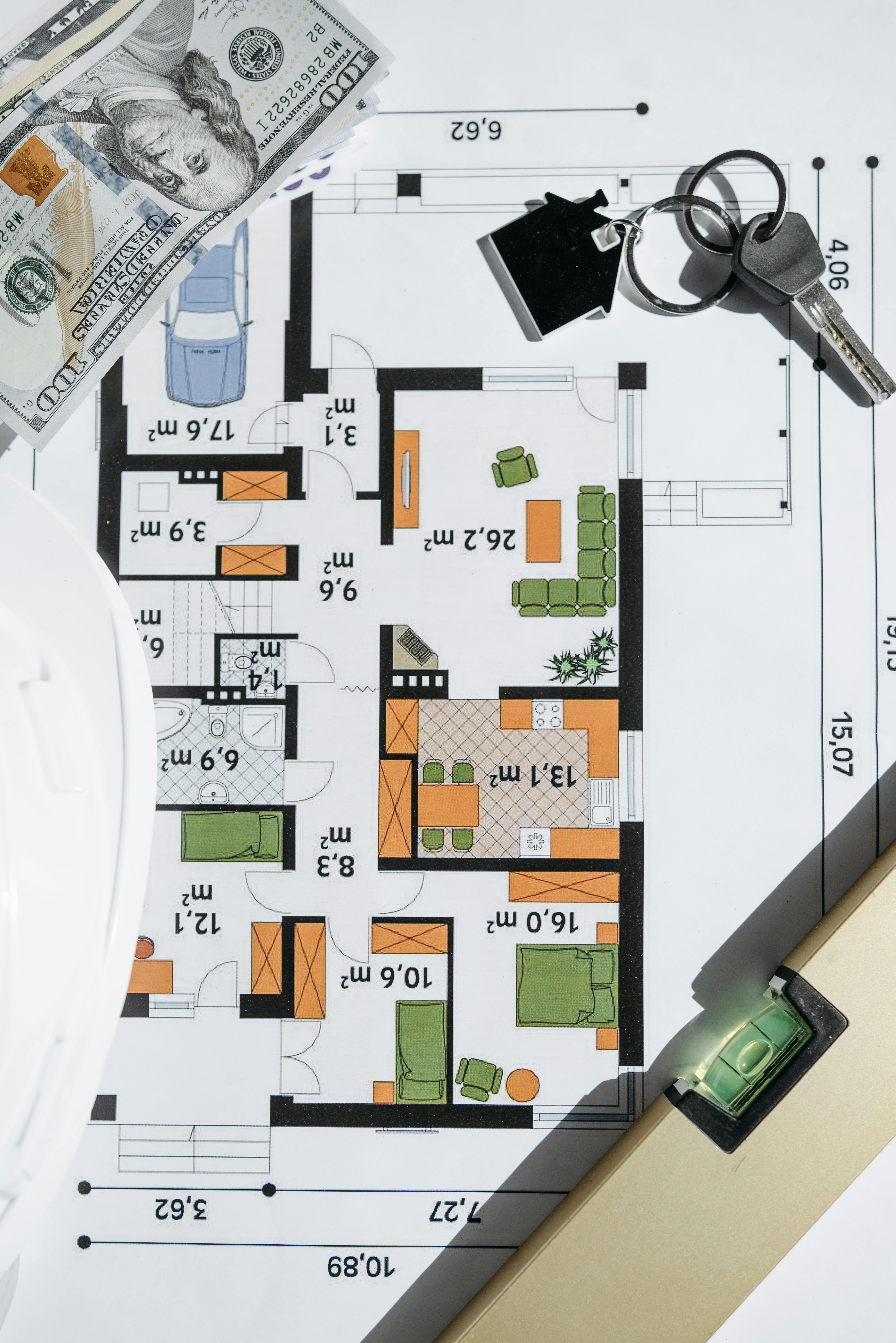
What this reserve often has to absorb first
- Moving-company, utility-transfer, and lock-change costs.
- Appliance, plumbing, roof, HVAC, or deductible-level repair surprises.
- Property-tax or insurance numbers that come in above the early estimate.
- Furniture and small setup expenses that felt optional until move-in day.
- A short income disruption or a month where several unrelated bills hit at once.
A practical reserve framework: strong, borderline, and too thin
Fannie Mae’s three-to-six-month safety-net guidance is useful because it creates a serious planning floor without pretending that every household should carry the exact same number. A low-debt buyer in a stable job and lower-maintenance home may be comfortable closer to the lower end. A household with thin monthly margin, variable income, high insurance risk, or an older home should assume the upper end may be more appropriate or even insufficient.
| Condition | What it usually means | Decision signal |
|---|---|---|
| Strong cushion | Closing leaves enough liquidity for essentials, move-in costs, and at least one unpleasant surprise without immediate debt stress. | The deal may still need monthly-payment testing, but the liquidity side is healthier. |
| Borderline cushion | Closing works, but the reserve rebuild depends on smooth months and no meaningful repair or billing surprise. | Consider a smaller purchase, a longer saving runway, or tighter assumptions before you commit. |
| Too thin | Closing empties reserves or leaves so little cash that a normal ownership problem becomes an immediate financing problem. | The purchase is not just tight. It is fragile. Waiting or changing the target home is usually cleaner than forcing it. |
What this page can and cannot decide for you
This page can help you judge whether your post-closing cash position looks sturdy, borderline, or too thin. It cannot replace a property-specific insurance quote, tax estimate, inspection result, HOA document review, or a household-level risk review. Those details decide whether the same reserve number is conservative or reckless.
If you still need the monthly side of the decision, use our take-home-pay guide and our affordability explainer. If you are deciding whether the upfront cash itself is realistic, go back to What Counts Toward Cash to Close Before an Offer.
Bottom line
How much emergency savings should you have after buying a house? Enough that the move still works after closing, not just at closing. If the purchase leaves no room for repair shocks, billing drift, or a bad month, the reserve cushion is too thin and the deal is weaker than it looks.
Sources
These sources are public and official. The scenario bands in this article are editorial planning tools layered on top of those sources, not a guaranteed reserve formula.
- Consumer Financial Protection Bureau, “Figure out how much you want to spend”
- Consumer Financial Protection Bureau, “Ready to buy a home?”
- Consumer Financial Protection Bureau, “What are all the costs of buying a home?”
- Consumer Financial Protection Bureau, “Monthly Payment Worksheet”
- Freddie Mac, “Budgeting for Upfront Homebuying Costs”
- Fannie Mae, “Prepare for the Costs of Buying and Owning a Home”
How this article was produced
This article was drafted with AI assistance and published by the Housing Pulse USA Editorial Team, which is responsible
for what appears here. Sources are linked in the text, and photographs carry their own credit and
licence.
We do not claim that a person re-checks every article before it is published, and we do not
present this as financial, legal, or tax advice. If you find something that looks wrong, tell us
and we will correct or withdraw it.
Leave a Reply